


Traffic congestion in South Africa is more than a daily frustration for fleet managers. When trucks stand still on the N1 or Cape Town’s arterial routes aren’t just a daily frustration—they are a direct operational cost.
With road transport accounting for over 80% of national freight (per the Land Transport Survey by Statistics South Africa), congestion severely hits productivity, fuel use, and safety. While the government explores long-term infrastructure alternatives—like the Department of Transport’s April 2026 Draft National Rail Master Plan —fleet operators need immediate solutions.
The reality is uncompromising: traffic congestion must be managed today with real-time visibility and smarter fleet technology.
What causes traffic congestion in South Africa?
To reduce the impact of congestion, it is important to understand what creates it. In South Africa, severe traffic delays are rarely caused by a single factor: most delays are caused by a combination of infrastructure pressure, urbanisation, road incidents, roadworks and energy-related disruptions.
Rapid urbanisation and infrastructure pressure
Major economic hubs such as Johannesburg, Pretoria, Cape Town and Durban face unprecedented road demand. As population grows and business districts expand, road networks designed for lower volumes struggle to cope. The daily competition for road space between private vehicles, buses, minibus taxis, delivery vans, and heavy freight makes peak-hour gridlock almost unavoidable.
Roadworks and maintenance
Road maintenance is essential for safety and long-term infrastructure quality, but it can also create short-term bottlenecks. On major corridors such as the N3 between Gauteng and Durban, lane closures and construction zones severely slow down commercial movement. For fleets, this turns optimized routes into fuel-burning idling zones due to temporary speed limits and diversions.
Road incidents and emergency response delays
Unpredictable incidents—collisions or breakdowns—can paralyse highways for kilometres, especially where shoulder space is limited. For commercial fleets, a single accident triggers a painful knock-on effect: late deliveries, missed appointments, longer driver hours and reduced schedule reliability.
Power instability and failed “robots”
South Africa faces a unique operational hurdle: grid instability. When traffic lights, commonly known as robots, go offline during local outages or load reduction, major intersections turn into high-risk, slow-moving four-way stops. For delivery fleets operating on tight windows, just three or four failed intersections can derail an entire day’s planning.
Freight demand on key corridors
Routes connecting ports, industrial hubs, and inland markets carry massive volumes of heavy vehicles. This concentration of freight traffic creates natural choke points, particularly around major industrial zones during peak operational hours.
How traffic congestion affects fleet operations
Delays are only the most visible symptom of traffic jams. Beneath the surface, congestion steadily drains vehicle efficiency, inflates running costs, and impacts both driver safety and customer trust.
Higher fuel consumption in traffic
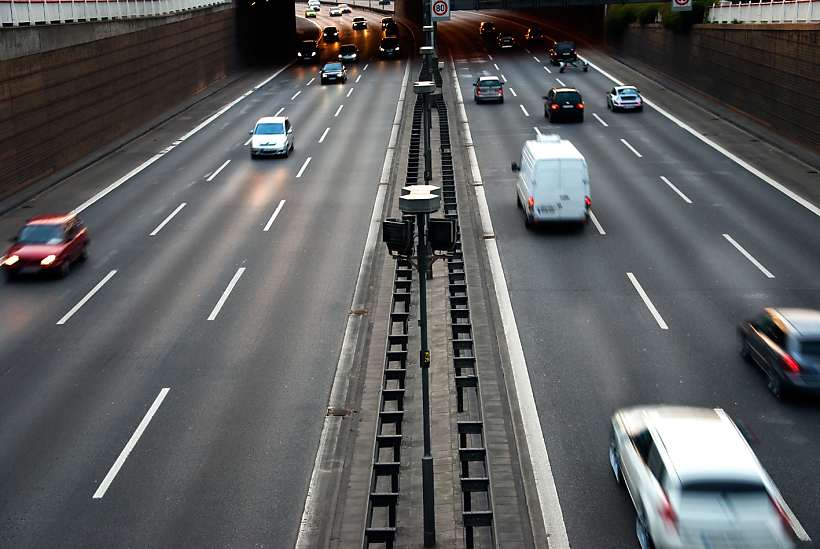
Stop-start driving is the enemy of fuel efficiency. According to the U.S. Department of Energy, aggressive driving in stop-and-go traffic can lower fuel economy by 10% to 40%. For South African fleets already battling volatile fuel prices, this frequent acceleration and idling translate into a massive, avoidable financial leak over the year.
Accelerated wear and tear
Congestion places severe stress on critical vehicle components. Clutches, brakes, and transmissions work double-time in heavy traffic. The result? Higher maintenance costs and unplanned downtime, pulling revenue-generating vehicles off the road and into the workshop.
Driver fatigue in congested traffic
Congestion builds frustration and fatigue. When drivers eventually clear the bottleneck, human nature kicks in: they often speed or brake harshly to recover lost time. This transforms a simple delay into a serious road safety and compliance risk.
Customer dissatisfaction
Modern customers demand proactive communication and precise Estimated Times of Arrival (ETAs). When congestion disrupts static planning, the fallout varies by sector:
- B2B Fleets: Repeated delays damage long-term commercial relationships and SLAs.
- Service Fleets: Late arrivals lead to cancelled appointments and increased complaints.
- Last-Mile Delivery: Poor ETA accuracy directly hurts brand reputation and repeat business.
The proof: 96 hours lost in Cape Town
Traffic data confirms the massive scale of this challenge. The 2025 INRIX Global Traffic Scorecard revealed that drivers in Cape Town lost an average of 96 hours to congestion last year, ranking it among the most congested urban areas globally. To survive these conditions, fleet operators must shift from rigid static routing to dynamic, real-time adaptation.
Compliance and road safety considerations
Fleet managers must also navigate a strict regulatory environment. South African road transport is governed by the National Road Traffic Act (overseen by the Department of Transport), which dictates rigid requirements for road safety, vehicle roadworthiness, and driver conduct.
Crucially, the Administrative Adjudication of Road Traffic Offences (AARTO) Act represents a massive shift in fleet compliance. With its national rollout officially deferred to 1 July 2026 , operators have a rapidly closing window to prepare. Once the points demerit system is active, monitoring driver behaviour will become a matter of business survival.
In congested conditions, the risk of compliance failures spikes. Frustrated drivers are far more tempted to commit infringements—such as speeding after clearing a bottleneck, unsafe lane changes, or illegal stopping. Telematics allow fleet managers to identify these risky behaviours in real-time, coaching drivers before they translate into costly fines or AARTO demerit points.
How fleet managers can reduce traffic congestion impact
Fleet managers cannot magically clear congestion from South African roads, but they can drastically reduce its impact. The key to resilience is shifting from reactive damage control to proactive, data-driven management.
1. Implement real-time vehicle tracking
Live visibility is the foundation of modern congestion management. Without it, fleet managers only discover delays when a customer complains. Real-time tracking allows businesses to:
- Pinpoint exactly which vehicles are caught in gridlock.
- Automatically update customers with highly accurate ETAs.
- Redirect the closest, unhindered vehicles to urgent jobs.
2. Apply dynamic route optimisation
Static route planning is obsolete in modern logistics. A route that flows perfectly at 6:00 AM might be a parking lot by 3:00 PM. Dynamic route optimisation software factors in live traffic conditions, delivery windows, and vehicle size to calculate the smartest path. The direct benefits include fewer unnecessary kilometres, reduced engine idling, and far more realistic driver schedules.
3. Plan around predictable bottlenecks
Not all congestion is a surprise. Major highways, industrial nodes, and central business districts follow predictable daily patterns. By leveraging historical telematics data, managers can identify recurring choke points and adjust operations, such as shifting delivery sequences away from peak hours or geofencing specific high-traffic zones.
4. Upgrade driver communication
Relying on WhatsApp messages or frantic phone calls while a driver is stuck in traffic is inefficient and unsafe. Professional in-cab navigation and communication terminals allow dispatchers to push updated routes and clear instructions directly to the dashboard, reducing confusion and preventing risky, last-minute detours.
5. Monitor and coach driver behaviour
Traffic breeds frustration. As drivers attempt to make up for lost time, incidents of harsh acceleration, hard braking, and speeding spike. Active behaviour monitoring allows managers to spot these dangerous patterns early and provide targeted coaching, protecting both road safety and the fuel budget.
6. Turn telematics data into future strategy
The most resilient fleets don’t just survive congestion; they learn from it. Over time, rich fleet data reveals which routes consistently bleed money, which specific delivery windows cause the most delays, and where resources are being wasted. This insight is critical for long-term route design and better resource allocation.
Building fleet resilience in a congested road environment
Traffic congestion is unlikely to disappear from South African roads anytime soon. Urban expansion, relentless freight demand, and ongoing infrastructure constraints will continue to test daily operations.
However, the daily gridlock does not have to dictate your bottom line. With the right technology and operational discipline, fleet managers can reclaim control over delays, costs, and service reliability.
A truly resilient fleet is defined by its ability to adapt quickly. It relies on real-time data rather than guesswork. It supports drivers with smart routing instead of simply pressuring them to chase lost time. It communicates proactively with waiting customers. Ultimately, it turns the unpredictable chaos of traffic disruption into a manageable operational variable.
The path forward with Webfleet
For South African businesses, traffic congestion is an undeniable part of the operating landscape. But standing still on the road does not have to mean losing control of your operations.
Webfleet equips fleet managers with the visibility and insight needed to outsmart congested routes. Through real-time tracking, dynamic route optimisation, and deep driver behaviour analytics, businesses can transition from reactive delays to proactive, data-driven decision-making.
Traffic congestion may be unavoidable, but its financial impact is entirely preventable. The future belongs to South African fleets that use technology to plan smarter, respond faster, and keep their vehicles moving efficiently.
 South Africa
 Chile
Chile Colombia
 México
 United States
 Australia
 New Zealand
 United Arab Emirates
 Belgique (Français)
 Česká Republika
 Danmark
 Deutschland
 España
 France
 Hungary
 Ireland
 Italia
 Nederland
 Österreich
 Polska
 Portugal
 Schweiz (Deutsch)
 Sverige
 United Kingdom